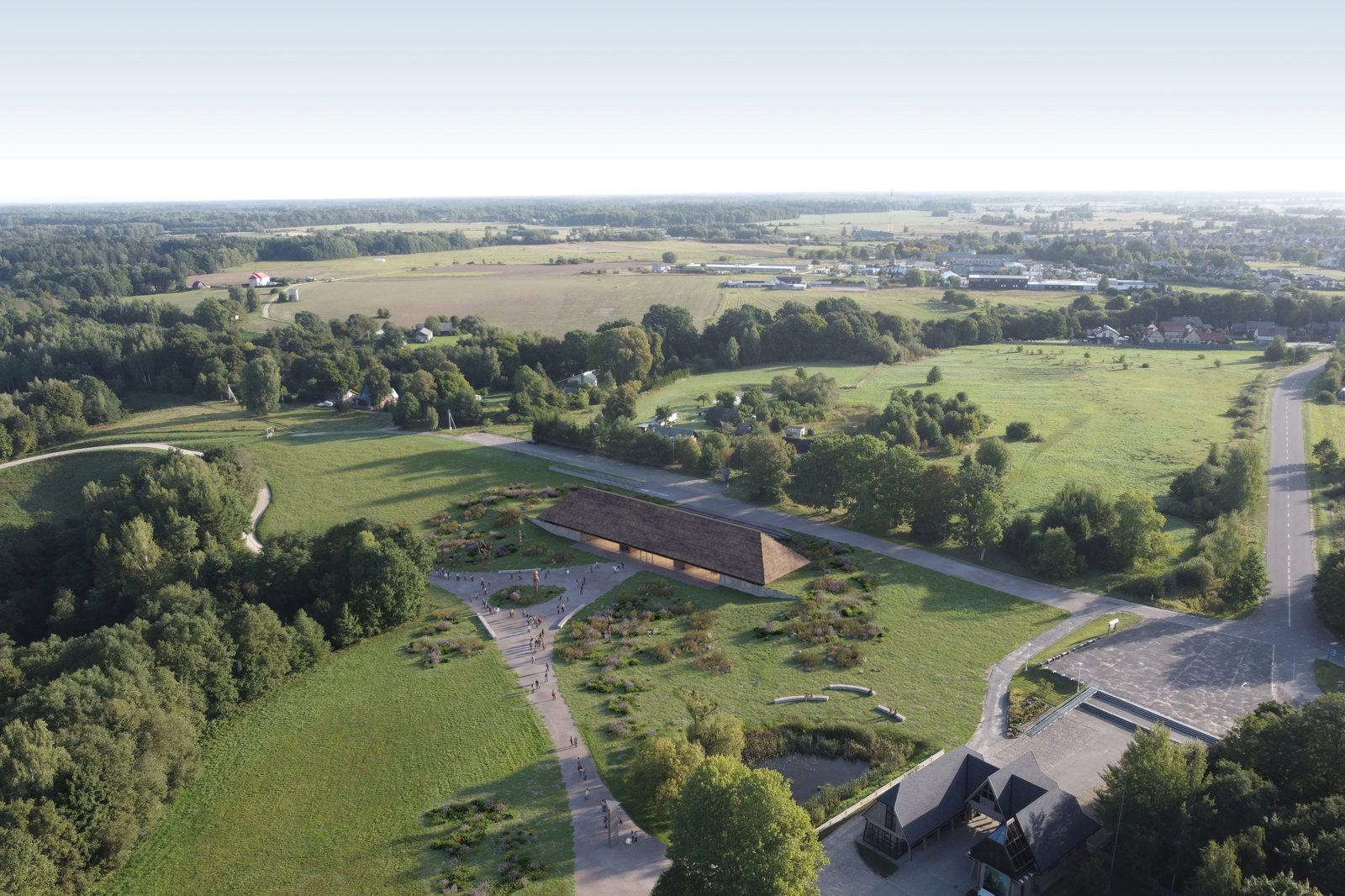
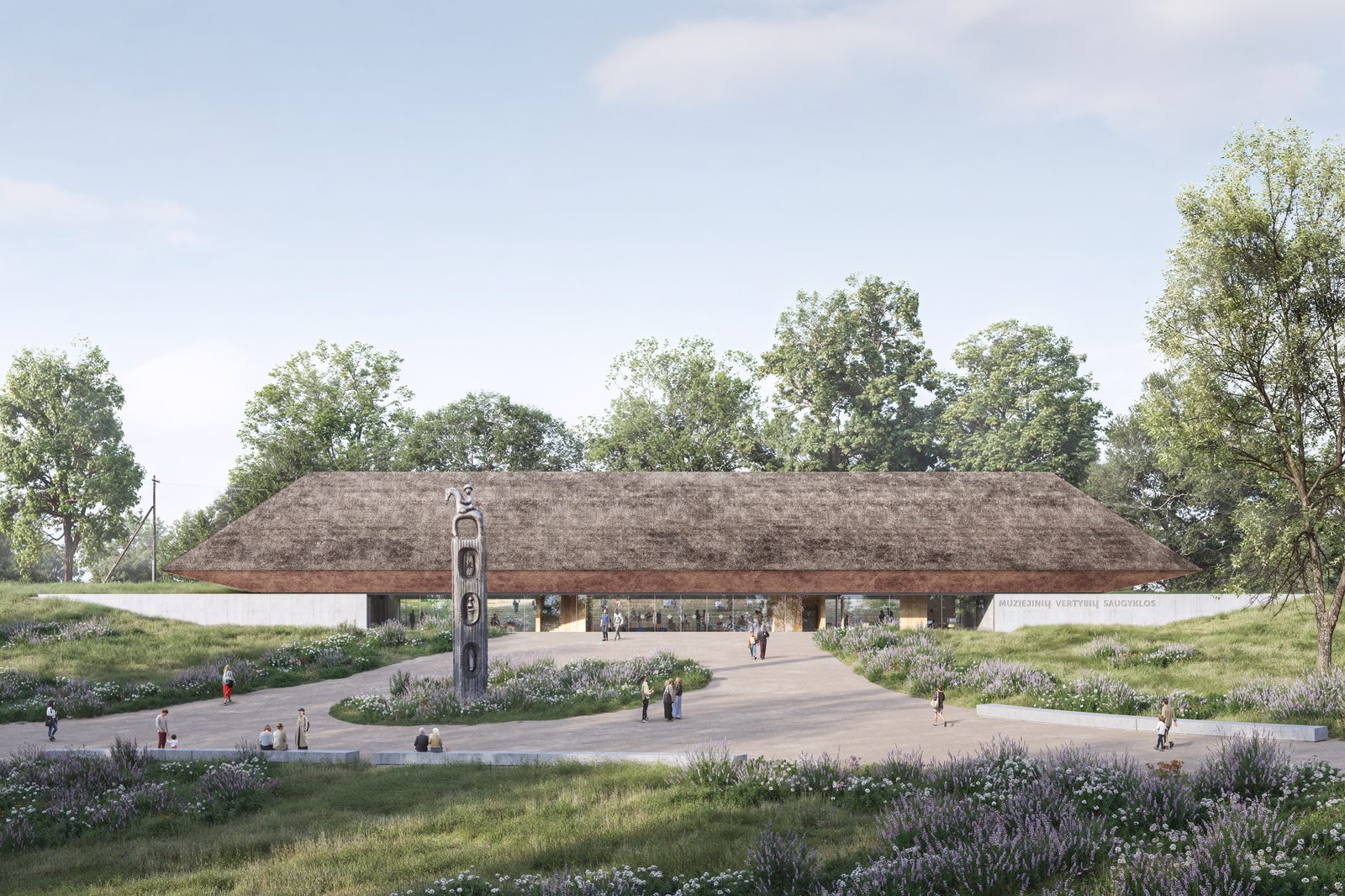
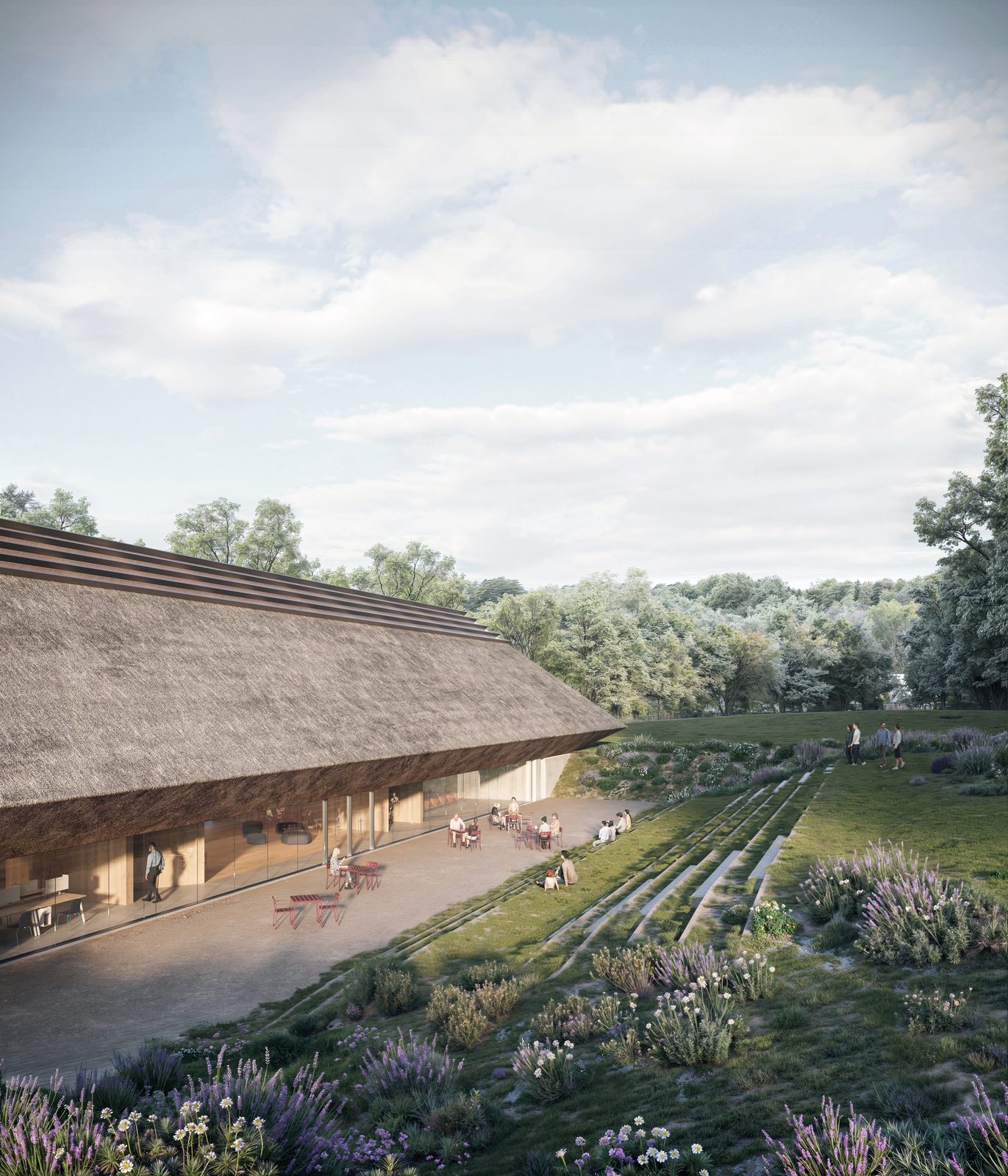
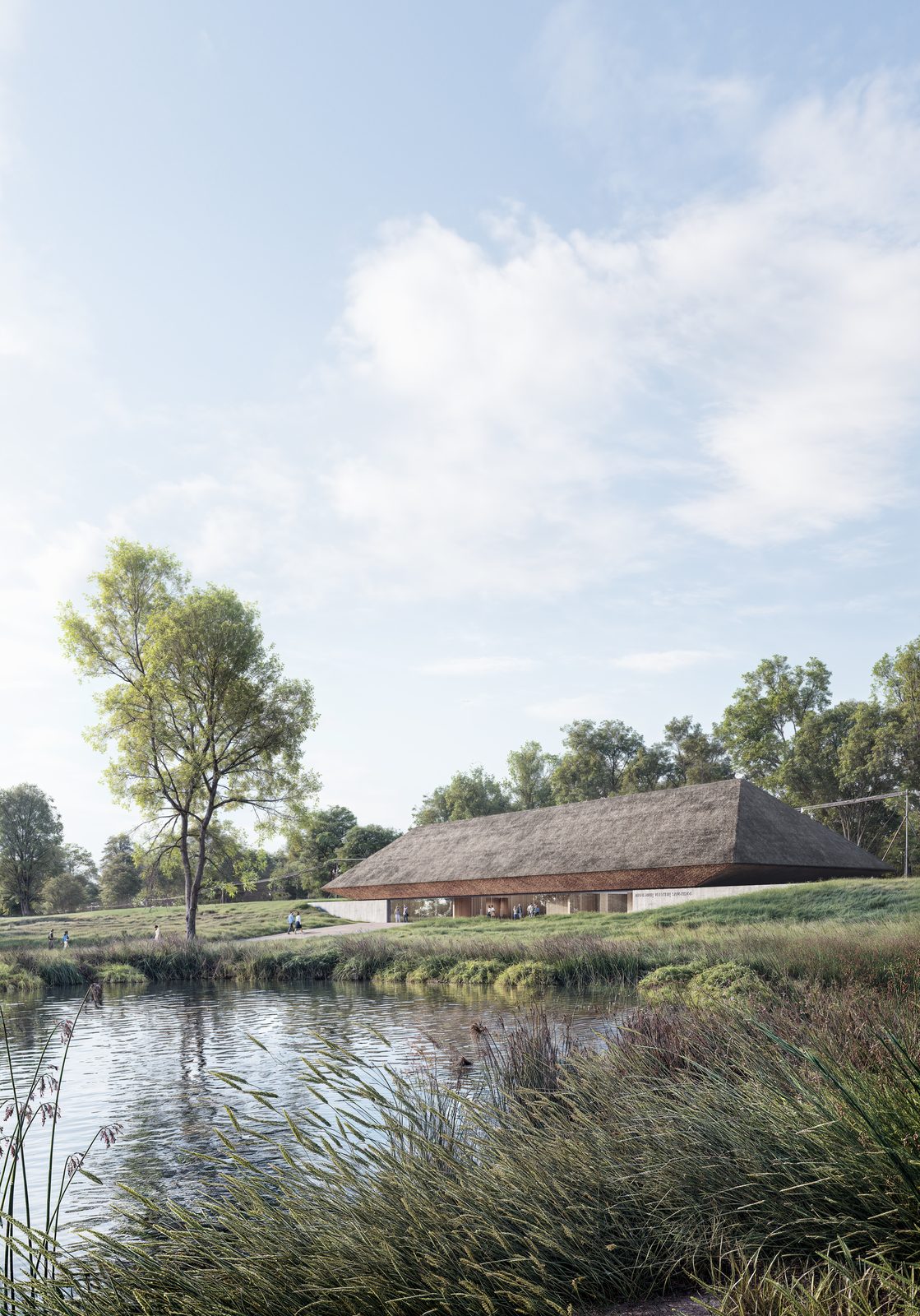
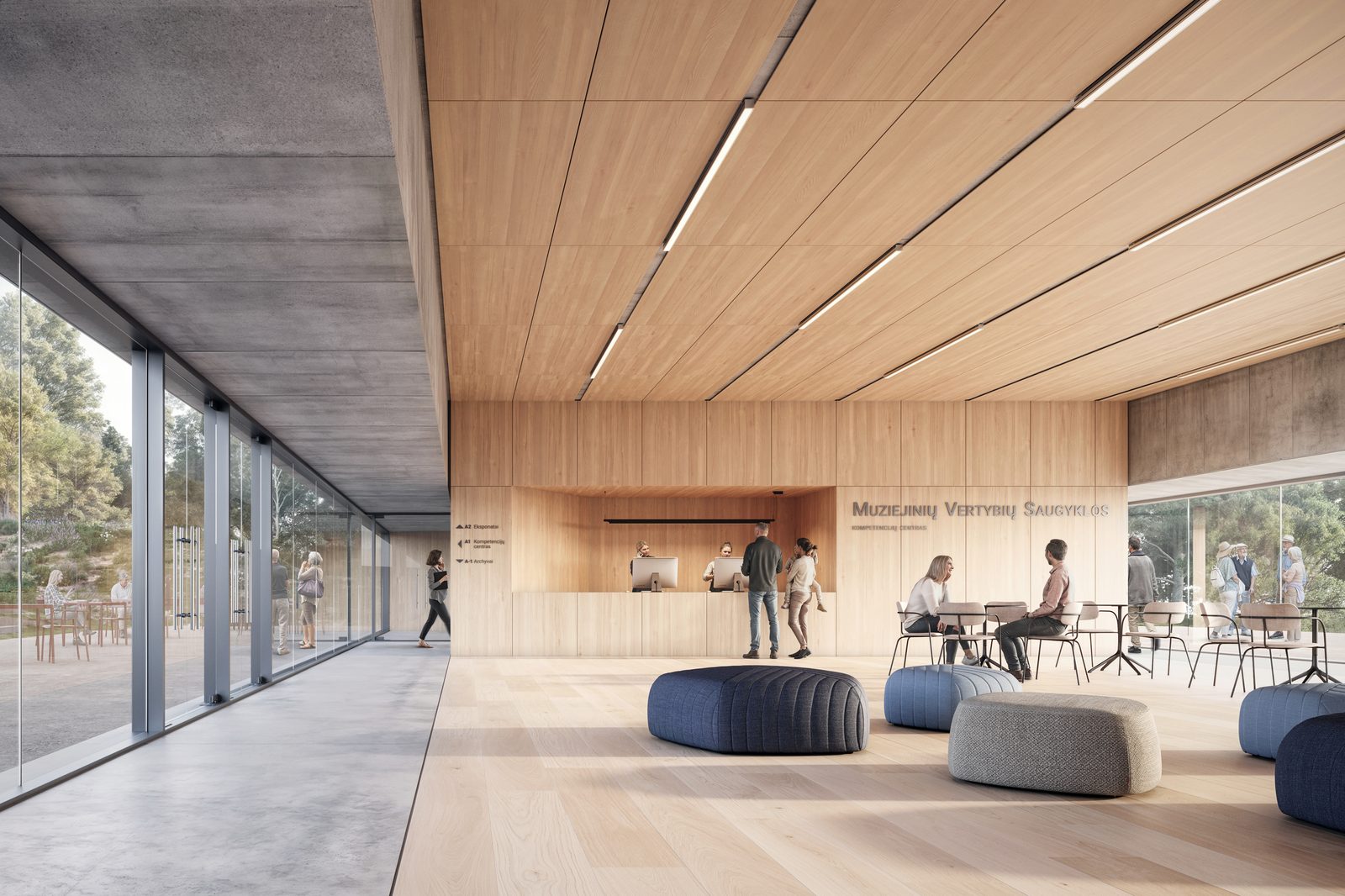
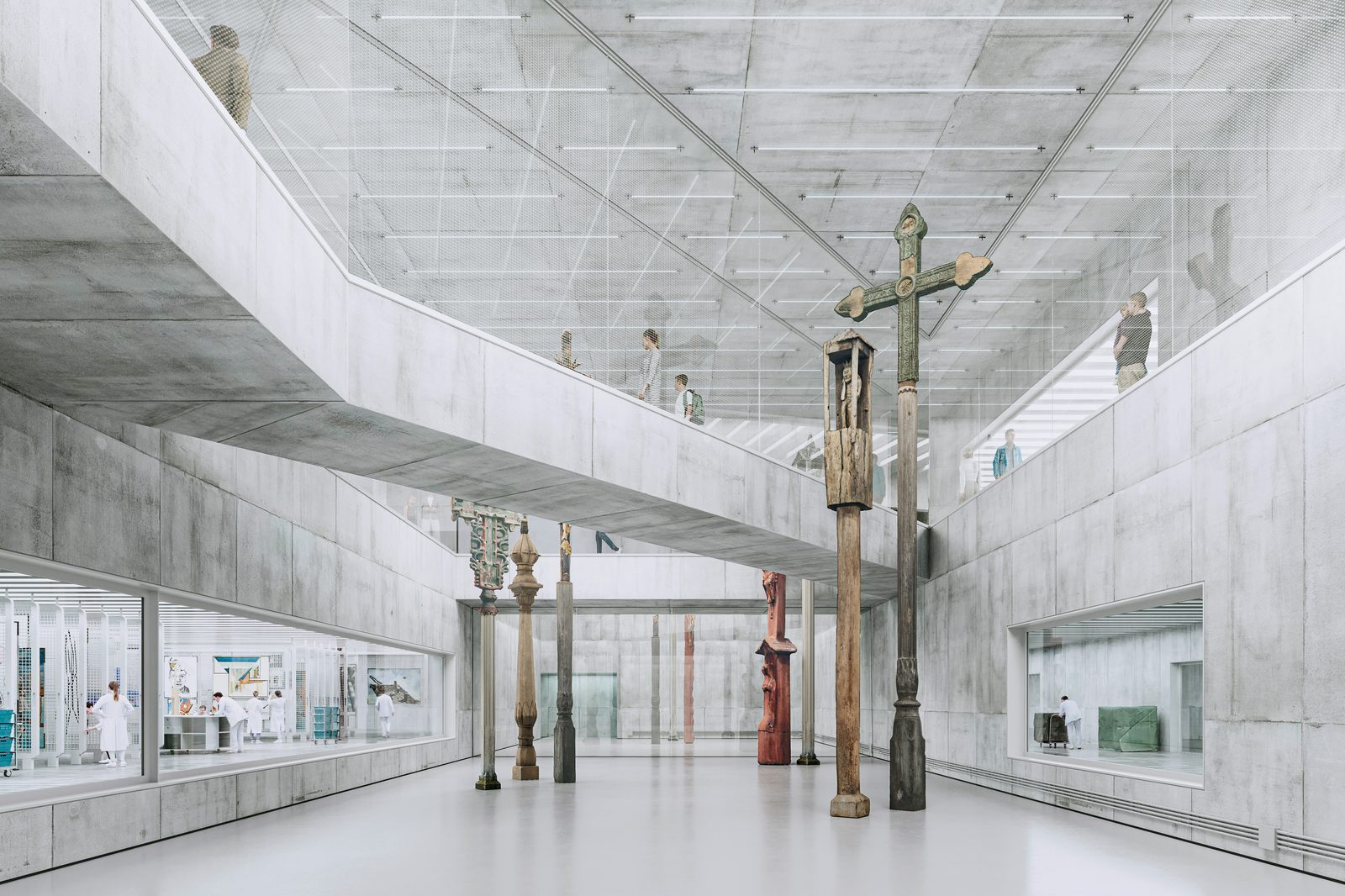
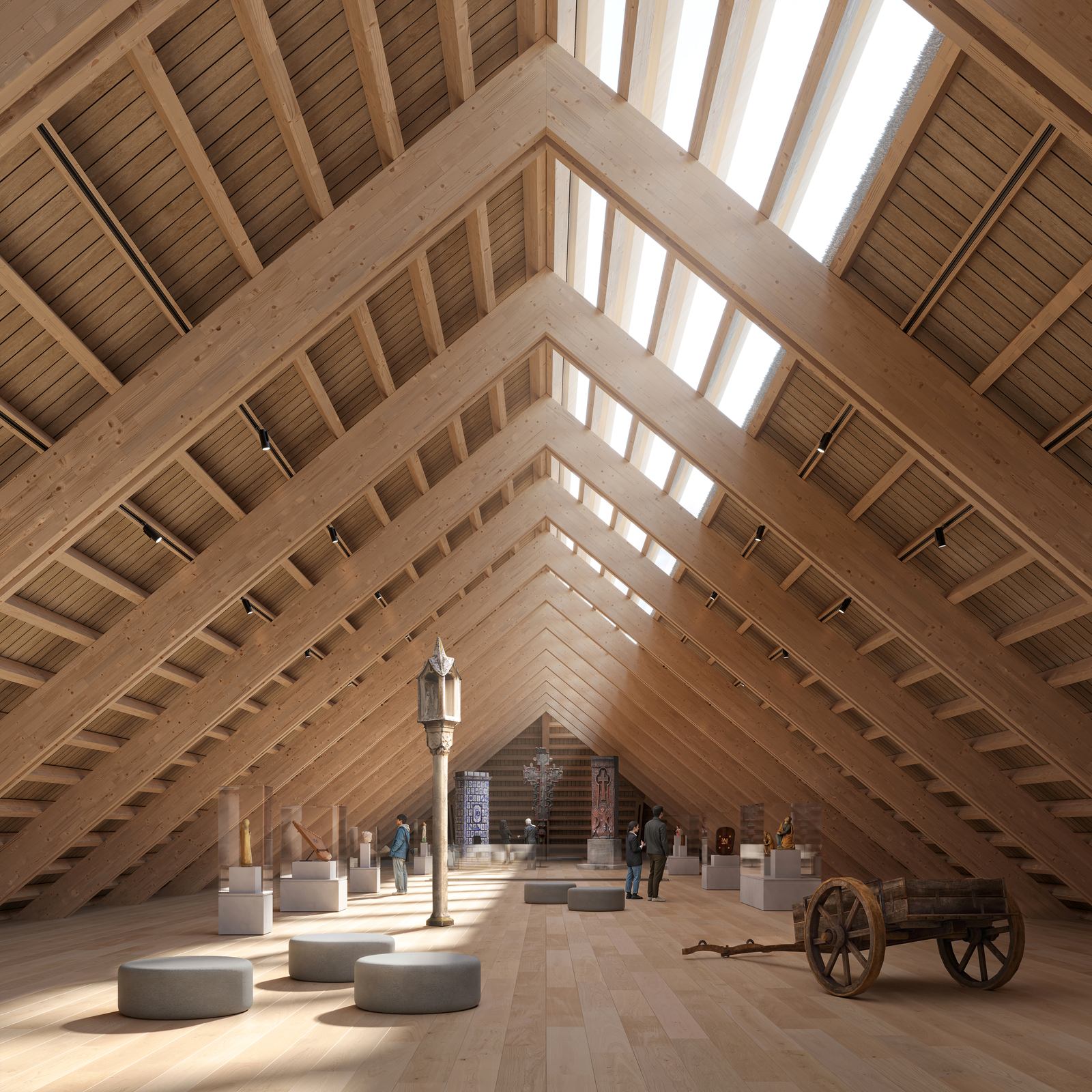
The project for the new centralised museum-archive arises from the will to overcome the traditional notion of the archive as a closed, invisible space, transforming it into an open, accessible place deeply connected with the community. The building is not only a structure for conserving cultural heritage, but an architecture able to unite memory, knowledge and collective life, becoming a new reference in the rural landscape.
The architectural conception draws inspiration from the context of the Rumšiškes ethnographic museum and from the typology of the klojimas, the traditional Lithuanian barn: a monumental agricultural building, isolated within the farmstead and intended for the conservation of the most precious goods. This analogy between the klojimas as store of the harvest and the archive as keeper of memory guided the whole project.
The architecture inserts itself into the landscape through simple, recognisable volumes, natural materials such as timber and straw, and a conscious use of natural light. Large visual openings relate the interior spaces to the surrounding fields, while the design of the ground dissolves the boundary between building and landscape.
The functional programme is organised into three conceptual and spatial levels: at the top, the roof hosts a large hall for temporary exhibitions; in the centre, a covered square holds the competence centre, the work spaces and the café; underground, three levels are dedicated to the archives. This layering mirrors the three founding principles: to show, to train and to conserve.